Confined Spaces
One of the highest-fatality work types. Most deaths are rescuers, not the original entrant. No entry without permit, atmospheric test, isolation, stand-by, rescue plan.
If a worker collapses in a confined space, the rescuer must NOT enter without air-supplied RPE. Most multiple-fatality events are sequential rescuers asphyxiating one after the other.
- Reg 4 definition: enclosed/partially enclosed; not designed for occupancy; risk of contaminants, O₂ outside 19.5–23.5%, engulfment, or restricted exit.
- Entry permit required every time — written, by competent person.
- Atmospheric test before entry: O₂ 19.5–23.5%, flammable < 5% LEL, contaminants below WES.
- Isolation by positive means — blanking, double-block-and-bleed, LOTO; not just closing a valve.
- Stand-by person outside, never in. Tested rescue plan ready.
1. Definition (Reg 4)
A confined space meets all four criteria:
- Enclosed or partially enclosed.
- Not designed or intended to be occupied by a person.
- At normal atmospheric pressure when occupied.
- Poses a risk from one or more of:
- Atmosphere with potentially harmful contaminants.
- O₂ deficiency or enrichment.
- Engulfment in stored / free-flowing material.
- Restricted means of entry/exit.
Examples: tanks, vessels, silos, pits, trenches > 1.5 m deep, ducts, sewers, underground wells, pipes, ceiling cavities, ships' holds, freight containers.
Classification follows the hazards present, not size. The same structure may or may not be a confined space depending on activity. Temporary controls (ventilation, monitoring) do not declassify — the space remains a confined space; controls just allow entry.
2. Identifying confined spaces
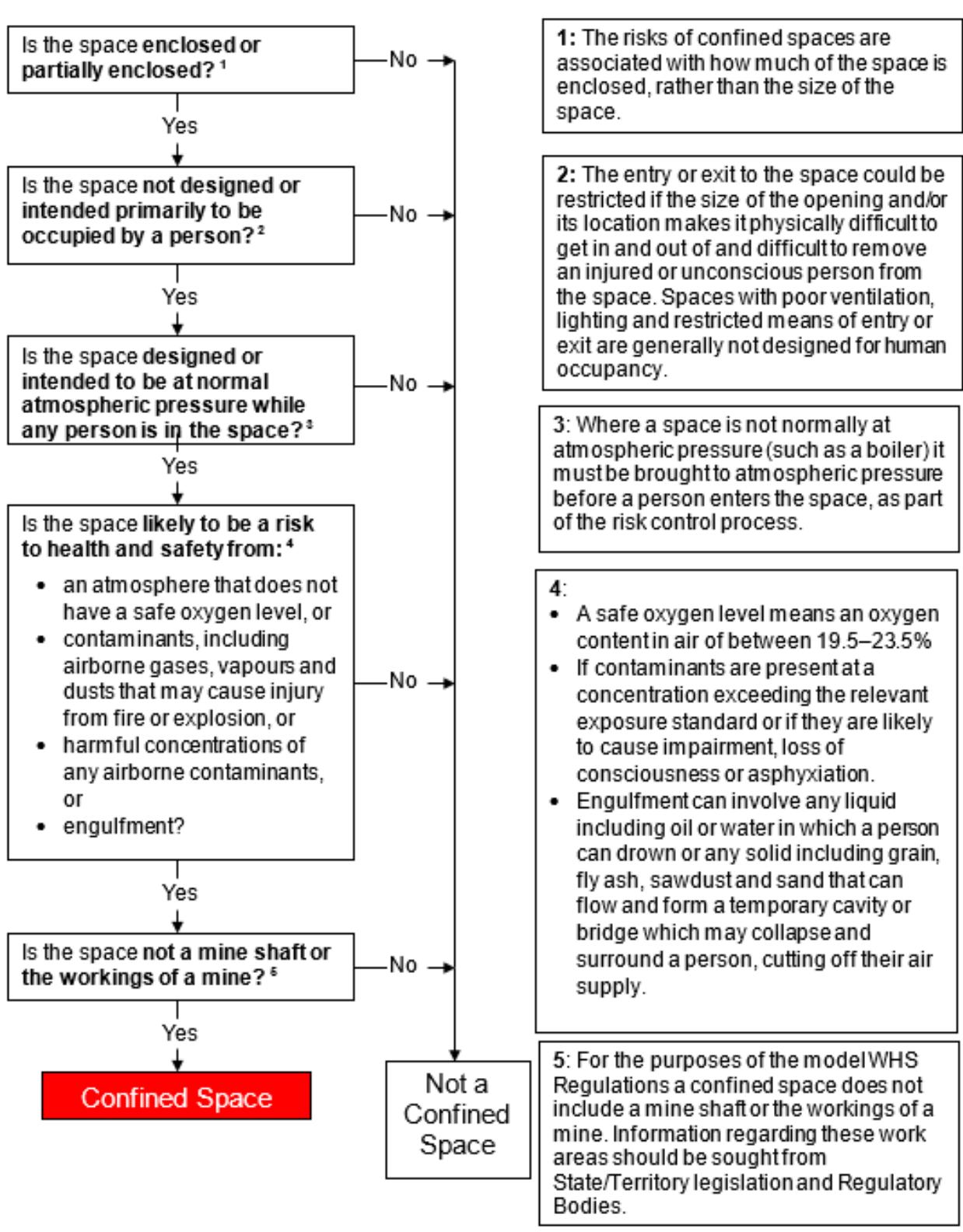 Figure 1 — Confined-space determination flow. Walk every workplace; classify each candidate; sign and register.
Mandatory duties (Reg 34)
- Identify all confined spaces in the workplace.
- Register with hazards documented.
- Sign each entrance: warning against unauthorised entry.
- Barricade where practical (signage alone is not enough).
- Make register available to workers and HSRs.
Hazards are often invisible. Prior use is the strongest signal — what was stored or processed indicates likely contaminants, O₂ depletion, residue, or biological hazard.
3. Engulfment and bridging
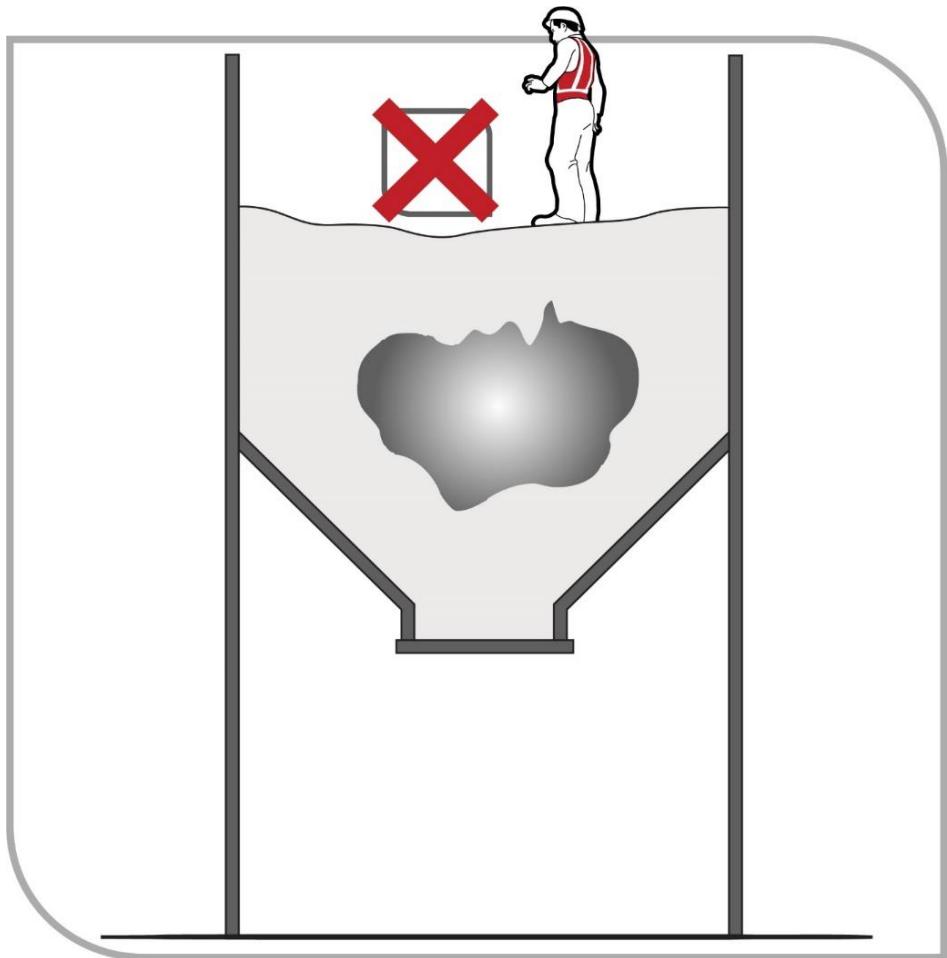 Figure 2 — Bridging hazard in silos: a crust of dry material forms over a void. Standing on the crust collapses it; the worker is buried in seconds. Common in silos containing grain, sand, sugar, fertiliser, sawdust.
4. Entry permit (Reg 67)
No entry without a written permit issued by a competent person.
Permit must include:
- Space identification (location, unique reference).
- Named entrants + authorised period.
- Hazards from risk assessment.
- Pre-entry controls: isolation, purging, ventilation, cleaning, signage.
- During-work controls: continuous monitoring, PPE, RPE specifications.
- Equipment exclusions (no ignition sources etc.).
- Atmospheric test results (pass/fail).
- Stand-by person identified.
- Rescue equipment type + location.
- Supervisor authorisation + entrant acknowledgement.
- Exit sign-off — all persons and equipment accounted for.
Retention: until work complete, or 2 years post-incident if notifiable.
One permit = one space. Multiple entries to the same space may share one permit if conditions remain constant.
5. Atmospheric testing (Reg 71)
Pre-entry test, every time. Continuous monitoring during work.
| Parameter | Acceptable |
|---|---|
| Oxygen | 19.5–23.5% by volume |
| Flammable gas/vapour | < 5% of LEL absolute requirement |
| 5–10% LEL | Exit unless continuous detector deployed |
| ≥ 10% LEL | Immediate evacuation |
| Airborne contaminants | Below Workplace Exposure Standard (WES) |
Purging (if required): use inert gas (nitrogen) — never pure O₂ or > 21% O₂ mixtures (extreme fire risk). Post-purge ventilation must restore O₂ to 21%. Re-test after purging.
6. Isolation (Reg 65)
A closed valve is not isolation. Isolation must be positive — physical, lockable, demonstrably blocking.
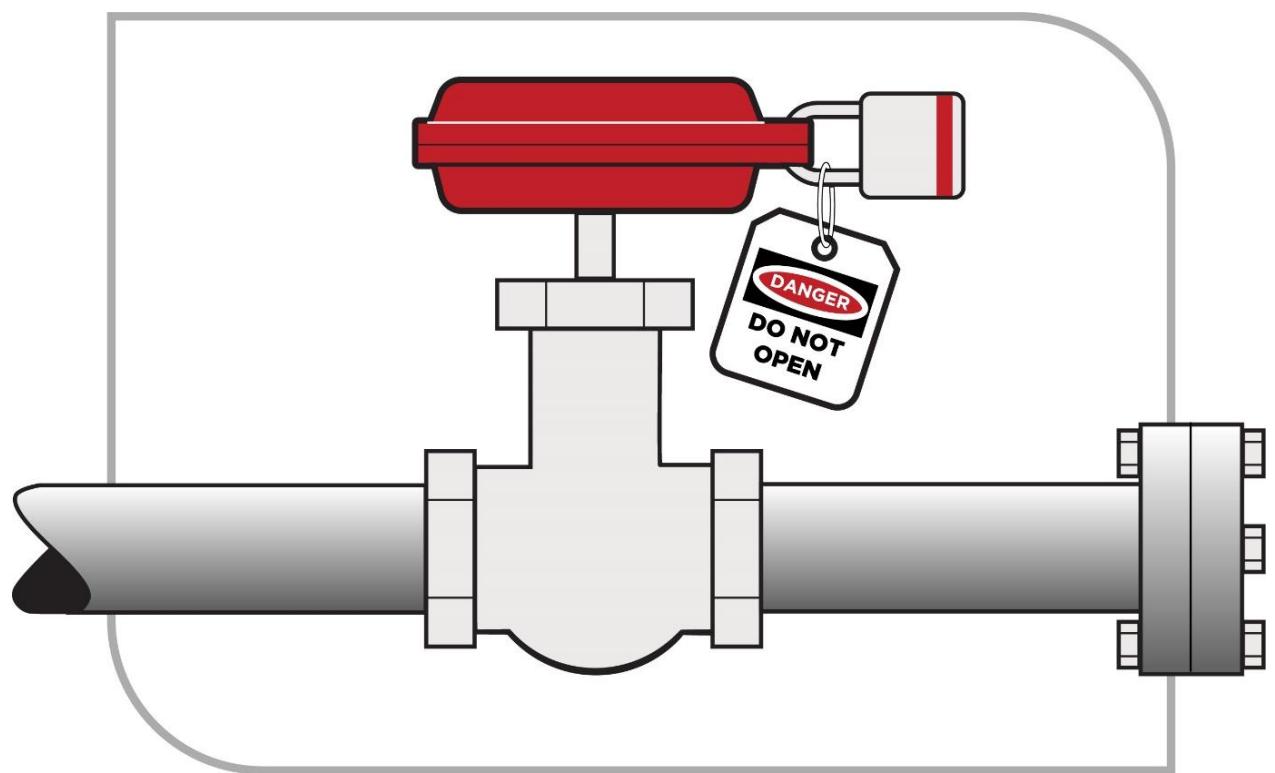 Figure 3 — Pipe blanked with cap; nearest valve closed, locked, and tagged.
Approved methods (or equivalent)
- Pipe removal: extract valve / spool / expansion joint near the space; blank or cap; tag for traceability.
- Spade insertion (full-pressure spade/blank) between flanges near the space; tag purpose.
- Double-block & bleed: close & lock two valves in series with a drain/vent valve locked open between them.
Mechanical / electrical
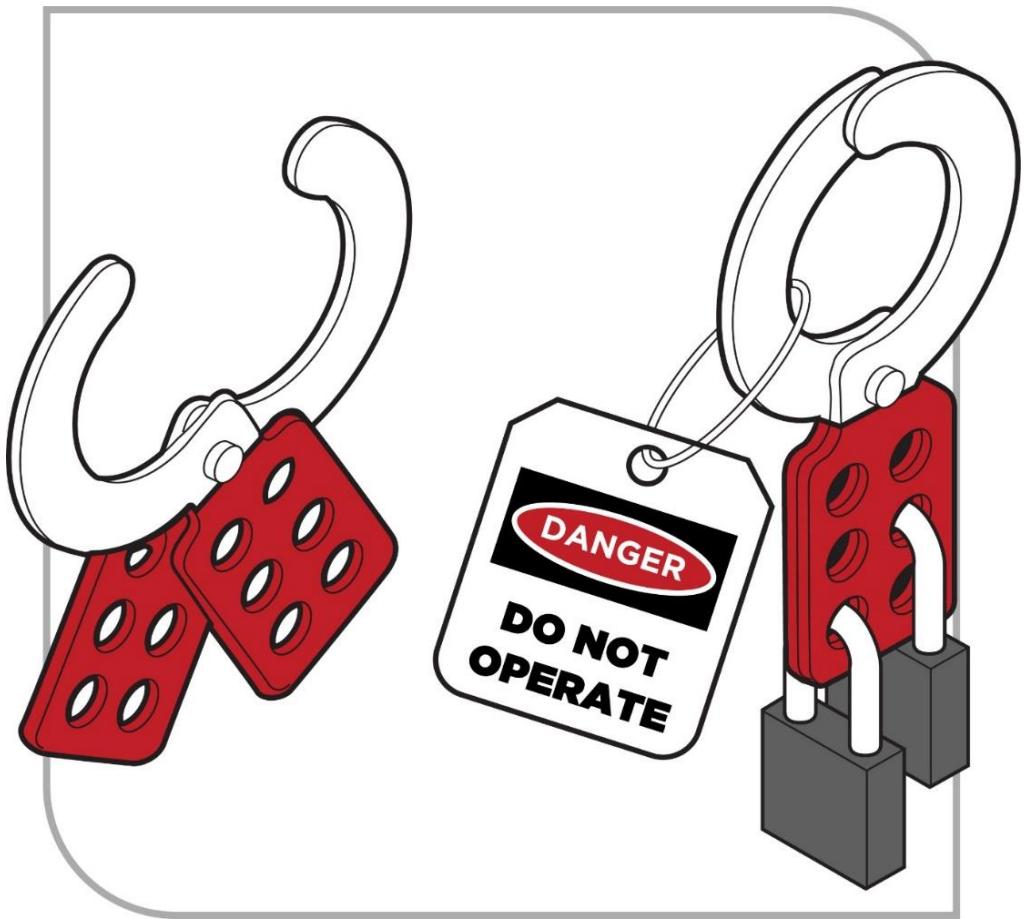 Figure 4 — LOTO at all isolation points. Each entrant applies their own personal lock.
- LOTO every energised system with moving parts.
- Remove agitators, blades, or wedge / chain them immobilised.
- De-energise hydraulic, pneumatic, electrical, thermal, chemical stored energy.
- Keys held only by the worker who applied the lock; spares under controlled access.
7. Stand-by person (Reg 69)
One trained, competent stand-by person remains outside at all times.
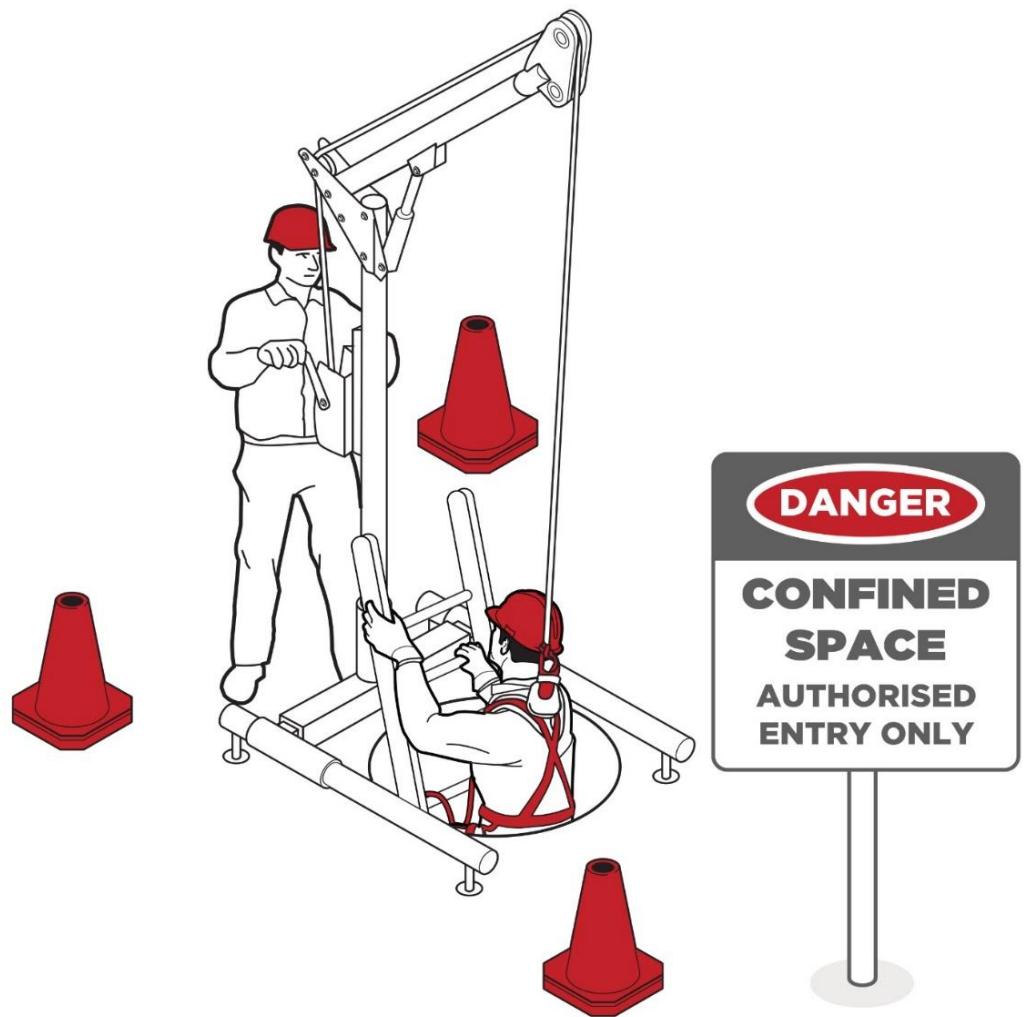 Figure 5 — Stand-by person with rescue equipment ready. Sign on the access. Never enters except for rescue, and only with appropriate RPE.
Duties:
- Continuous communication with entrants (voice, radio, hand signals).
- Monitor conditions; observe activity where practicable.
- Recognise distress signs (slurred speech, irregular breathing, collapse).
- Have rescue equipment immediately to hand (harness, lifeline, lifting gear).
- Authority to order evacuation if conditions change.
- Initiate emergency procedures and summon help.
No other work: full attention required.
8. Rescue plan (Reg 74)
Mandatory written plan. Tested. Never rely on emergency services as the primary mechanism.
Cover:
- Location accessibility; distance to medical care.
- Communications: how alarm is raised, 24/7 activation including night/weekend.
- Rescue equipment type, size, suitability; immediately accessible.
- Rescuer capability: training, fitness, BA / lifeline / equipment competency.
- Rescuer protection: air-supplied RPE if atmosphere is unsafe (assume unsafe if entrant unconscious from O₂ or contaminants).
- First aid: trained personnel, equipment on site.
- Pre-coordinated emergency-services arrangements (backup, not primary).
Rescue from outside the space wherever possible. If entry is required, rescuers wear air-supplied RPE.
Procedures must be rehearsed.
9. Training (Reg 76)
All relevant workers — entrants, stand-by, supervisors, rescuers — must be trained in:
- Nature of hazards (O₂ depletion, contaminants, fire/explosion, engulfment, biological).
- Why each control is essential and how to apply it.
- PPE & RPE selection, fit-testing, use, storage, maintenance.
- Permit content and what it means.
- Emergency procedures, alarm activation, evacuation, rescue role-play, first aid.
Supervisors count as "relevant workers" — equivalent training.
Records: 2 years.
10. Common pitfalls / quick wins
Do
- Maintain a register of confined spaces; sign every entrance.
- Write standardised permits — laminate; one per space type.
- Test atmosphere every entry, even into spaces previously found "clean".
- Position rescue equipment outside every permitted space.
- Rehearse rescue annually with local emergency services.
- Use double-block-and-bleed — single-valve isolation has killed people.
- Continuous gas monitoring during occupancy with alarm to stand-by.
Don't
- Ventilate to "declassify" — the space stays classified.
- Let stand-by multitask. Full attention only.
- Let stand-by enter for rescue without air-supplied RPE.
- Rely on emergency services as the primary rescue mechanism.
- Use oxygen to ventilate — extreme fire risk.
- Skip the test because "we always work this tank" — conditions change.
11. Cross-references
- See also: excavation_work (deep trenches), welding_processes (welding inside vessels), managing_electrical_risks (LOTO of energised equipment)
- Foundations: risk_management_process
- Glossary (confined space, LEL, WES, BA): glossary_and_key_concepts
Source: model_code_of_practice-confined_spaces-nov24.pdf (Safe Work Australia, model Code of Practice, CC-BY-NC 4.0). Edition: November 2024 (supersedes July 2020). Reg 4 definition, entry-permit and atmospheric-testing requirements carried forward unchanged. Last verified against SWA: 2026-04-28.